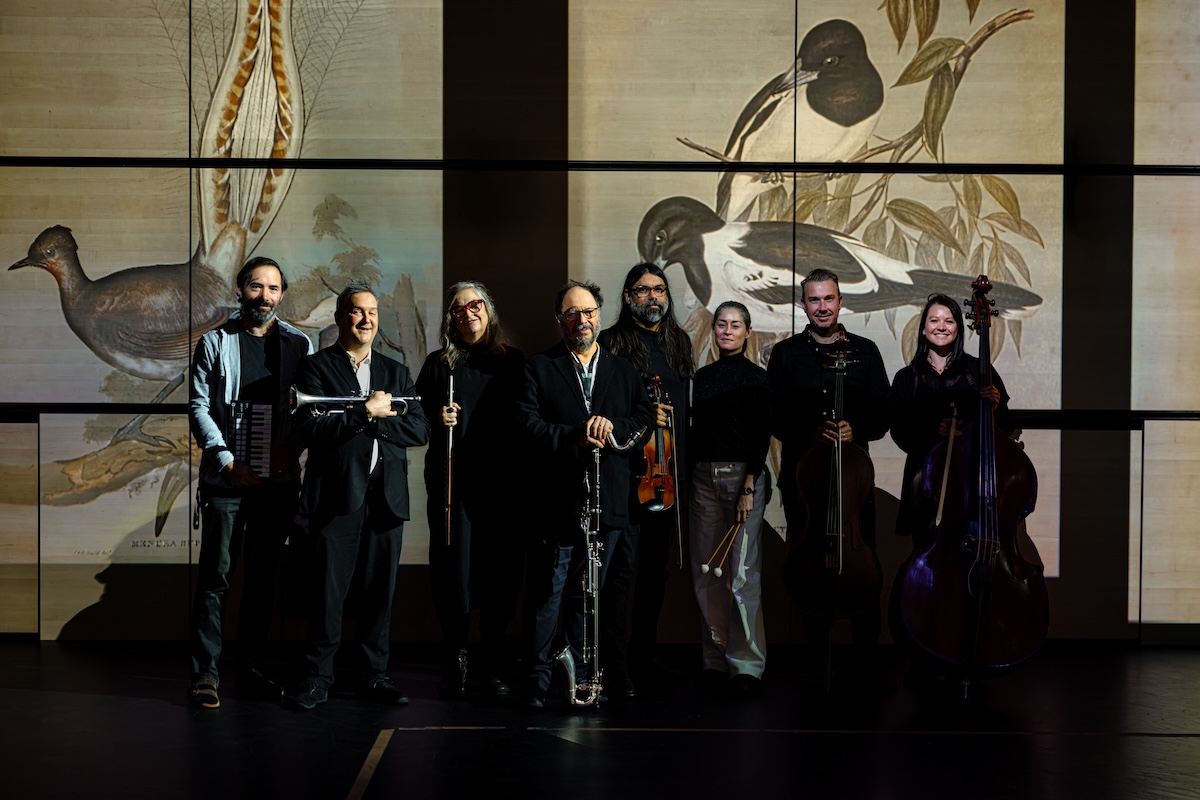
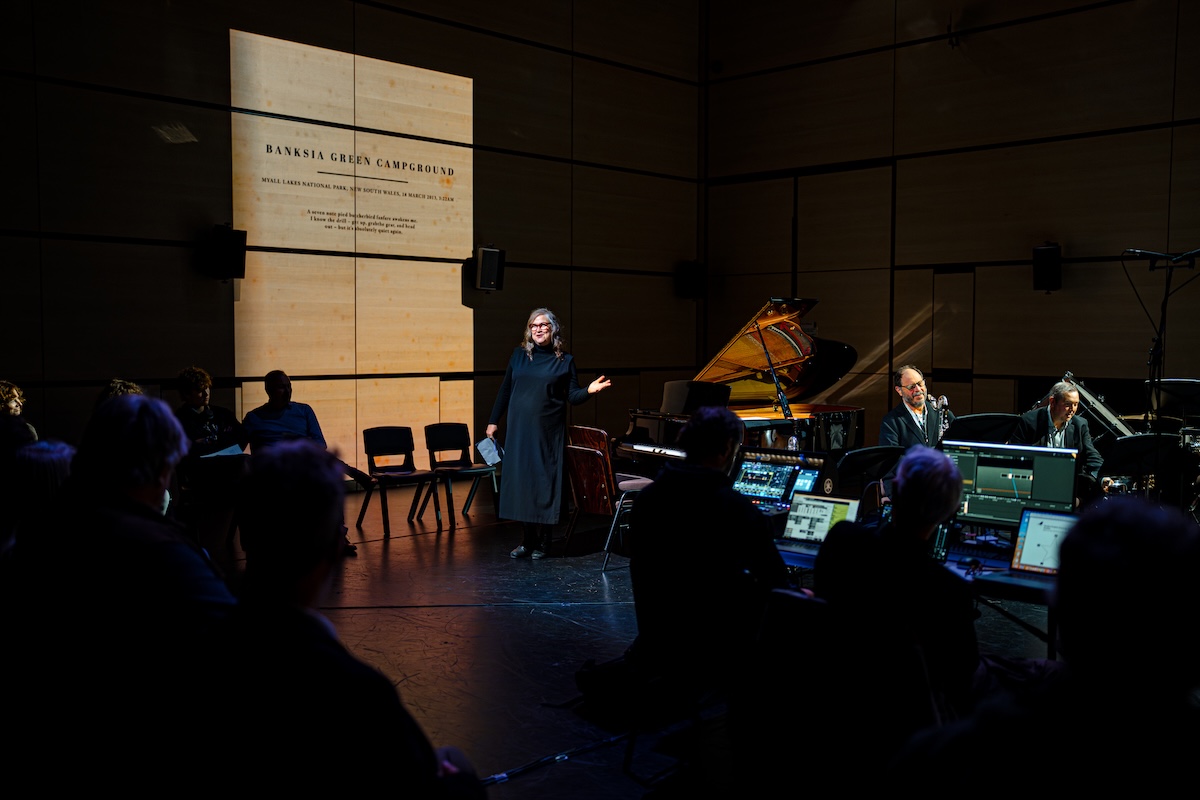
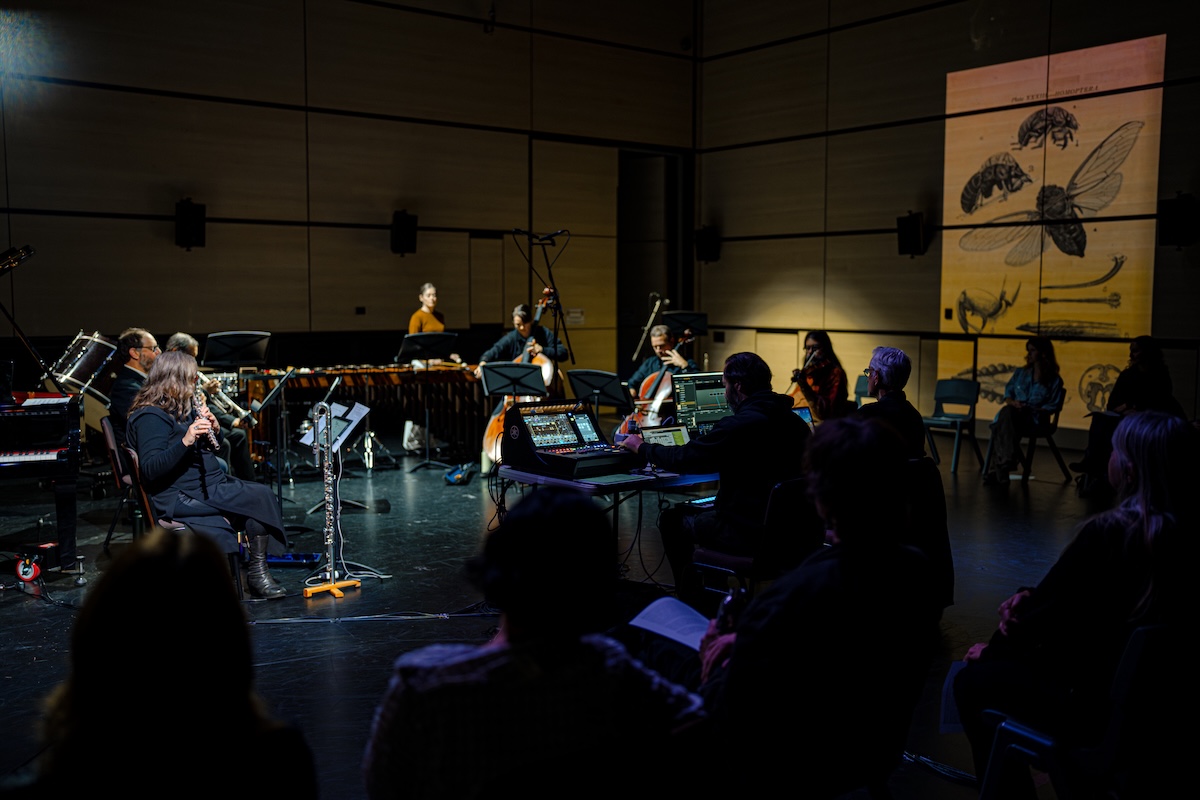
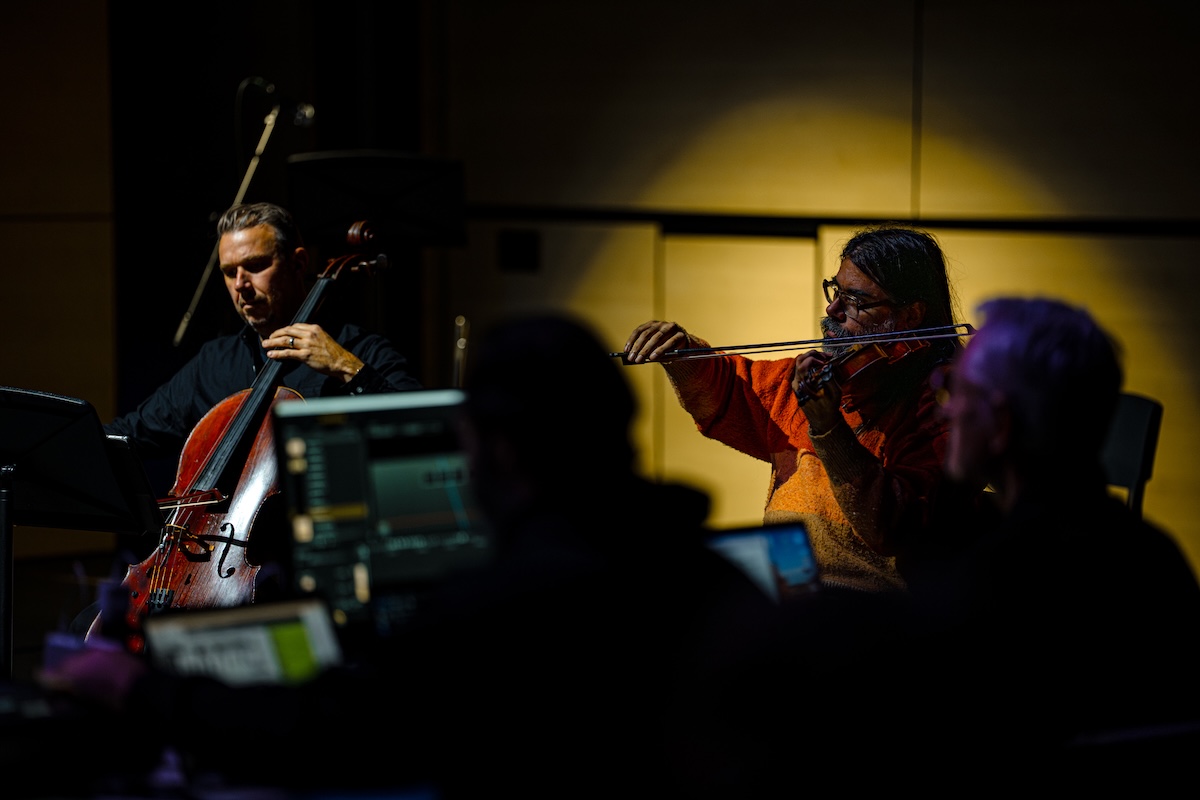
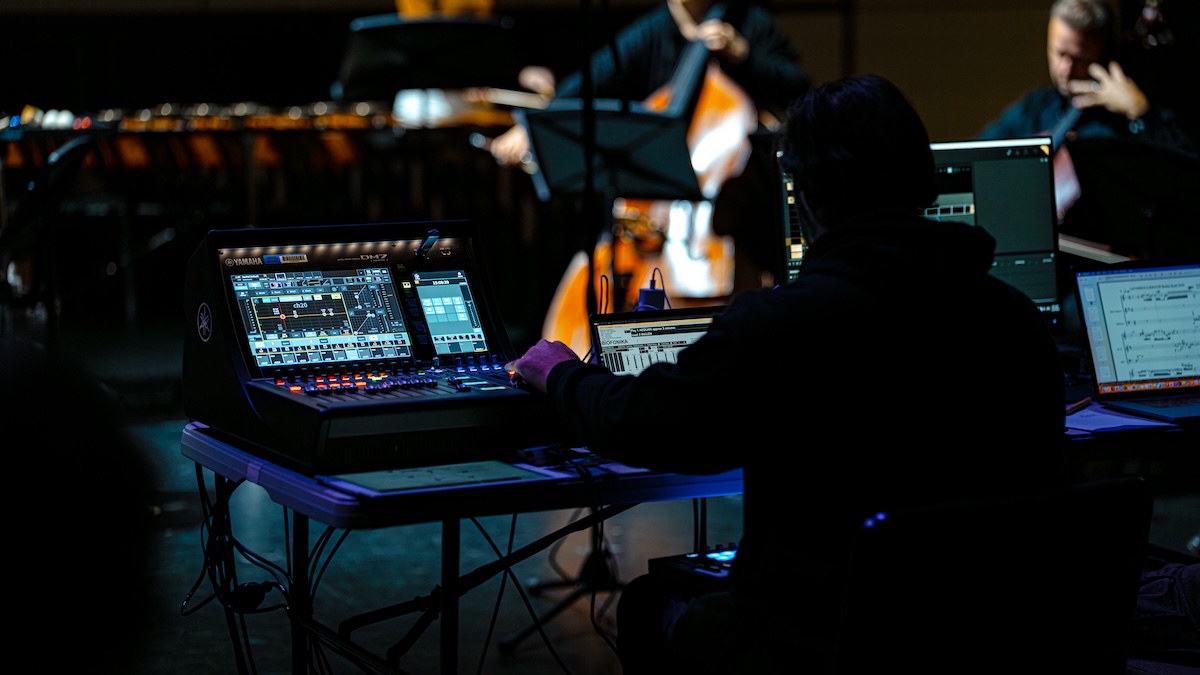
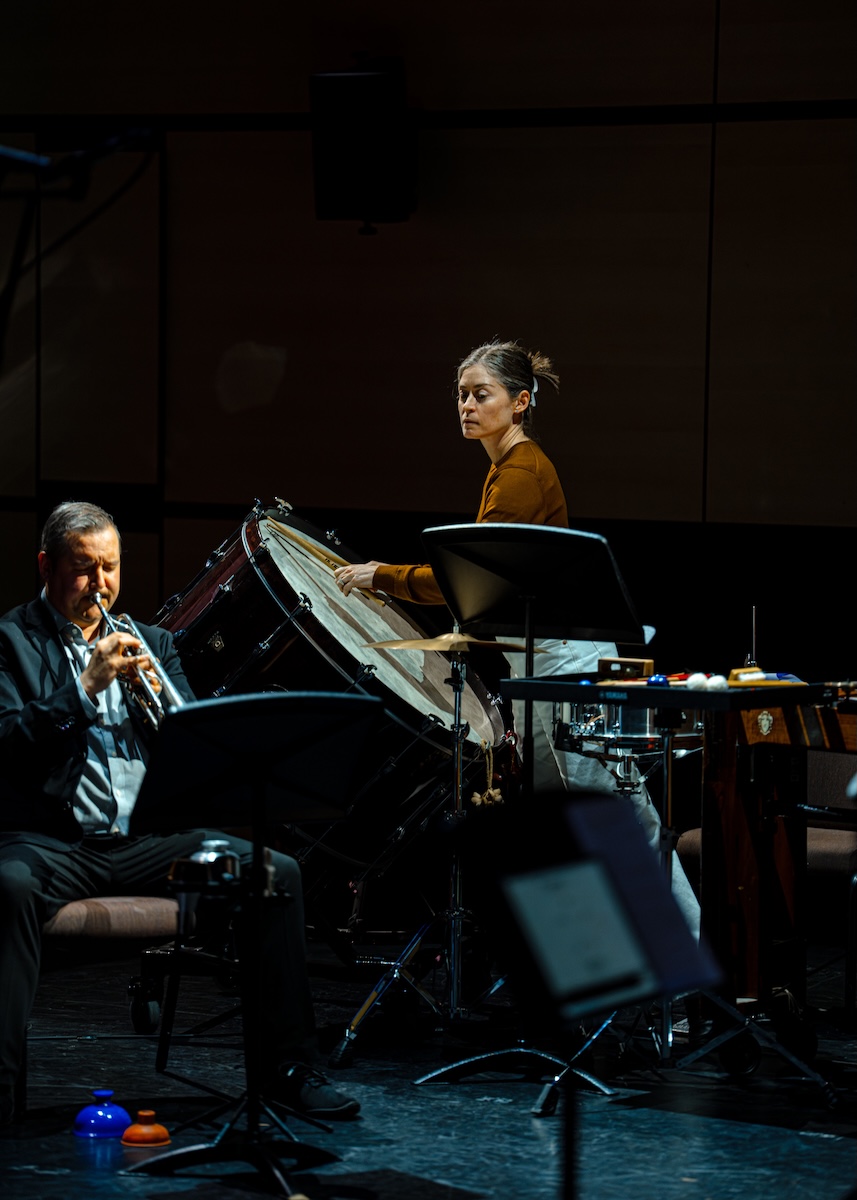
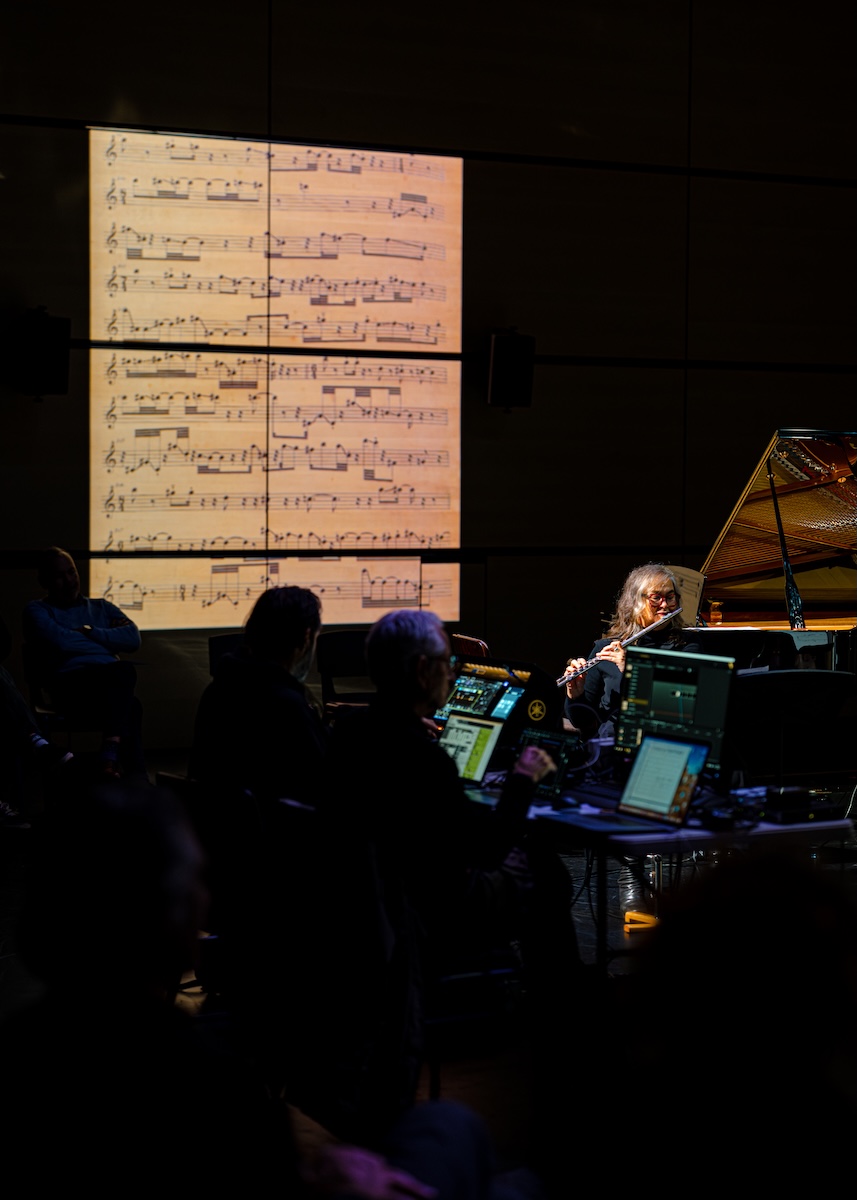
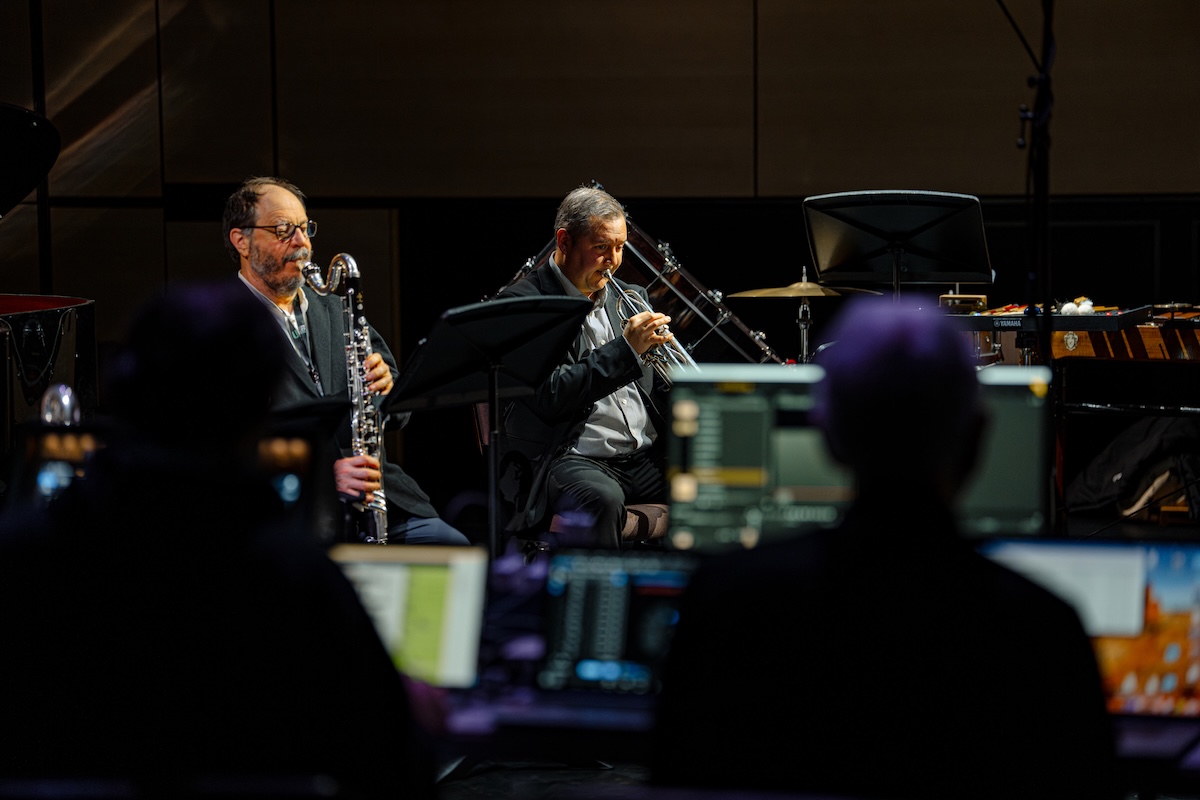
Decibel has just wrapped up an intensive three-week development of BioFONIKA, a major new work by composers Hollis Taylor and Jon Rose that will premiere in 2027.
Drawing on extraordinary field recordings of Australian birdlife by Hollis Taylor and Jon Rose, BioFONIKA combines electronic transformation and live performance with recordings of birds, cicadas, frogs, bees, water, spoken word and sounds from the Australian landscape, alongside recordings submitted by members of the public. Together, these materials form a one-hour work comprising 16 interconnected parts.
The first stage of development took place during a Music/Sound Research Residency at Bundanon in NSW, where Decibel members Cat Hope, Lindsay Vickery and Aaron Wyatt prepared the project’s scores using the Decibel ScorePlayer. During the residency, the team also developed a new metronome function to coordinate performers with field recordings and Disklavier (computer-driven piano) parts.
The project then moved to WAAPA‘s Derksen Studio at ECU City in Boorloo/Perth, where Hope, Vickery, Stuart James and Jon Rose refined the musical and technical elements of the work. This included spatialising the field recordings across the studio’s multichannel speaker system, developing the accompanying video presentation, and designing the instrumental sound and staging.
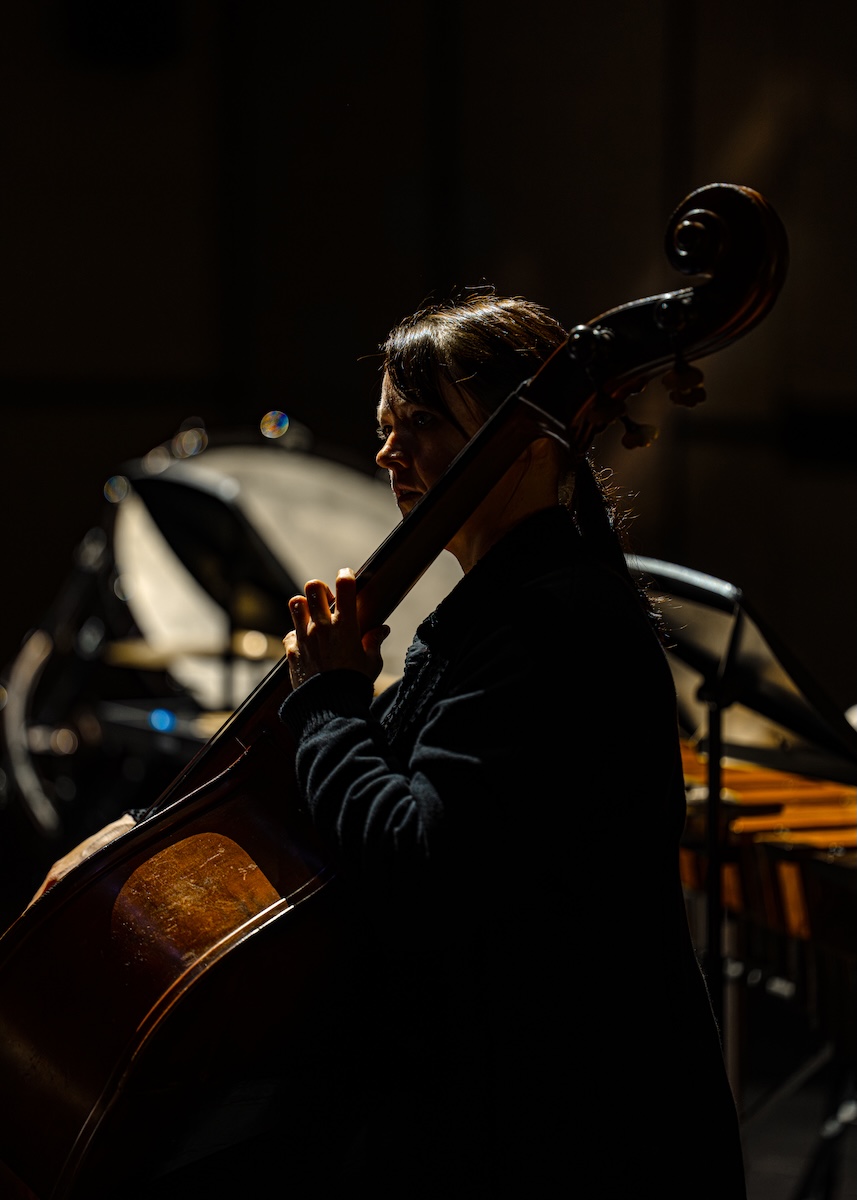
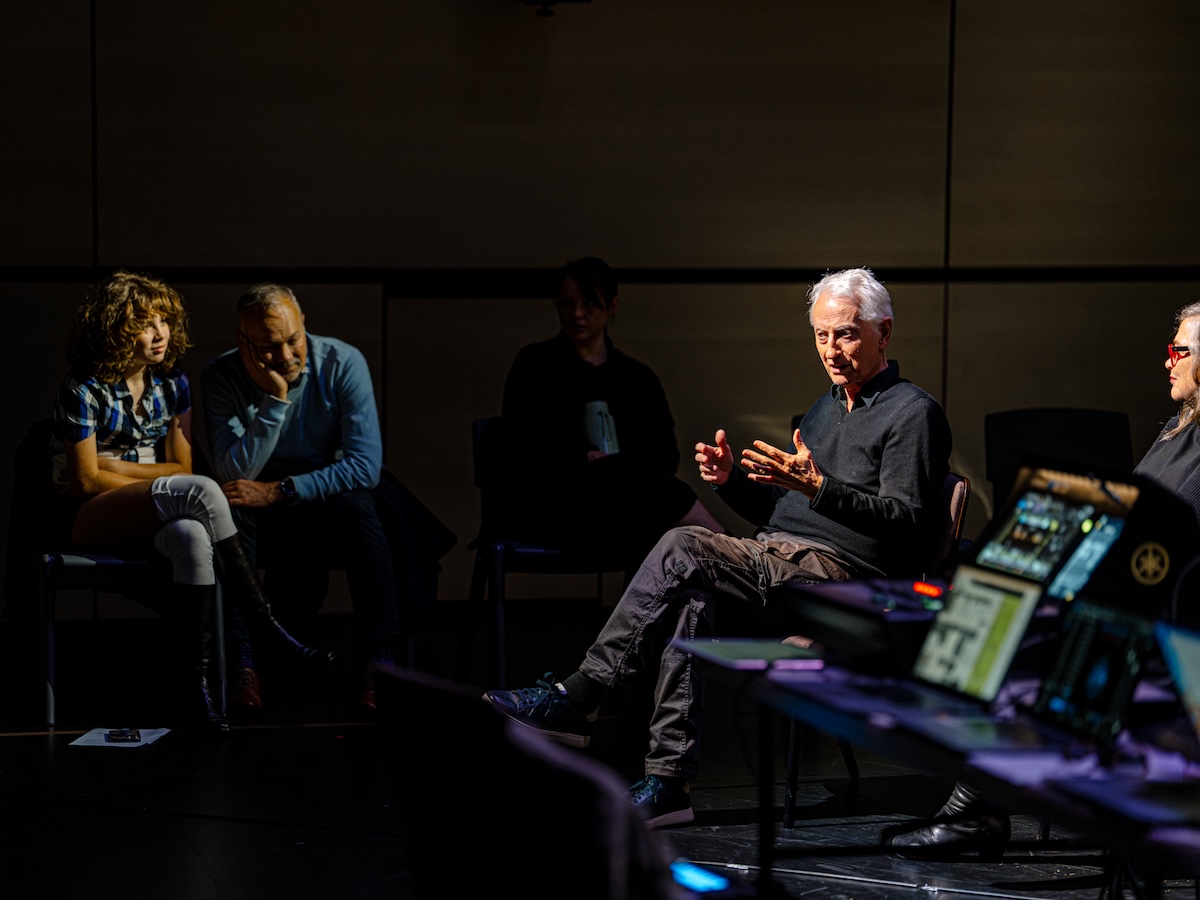
In the final week, the full ensemble was joined by guest musicians Craig Pedersen (trumpet) and Mary Rapp (double bass) for rehearsals and an invited showing of the developing work. The presentation concluded with a Q&A attended by invited critical friends, providing valuable feedback as the project continues towards its 2027 premiere.
BioFONIKA is commissioned by Decibel with support from Creative Australia, Bundanon Trust, the Western Australian Academy of Performing Arts (WAAPA) and the Sir Zelman Cowen School of Music and Performance at Monash University.
Photos by Edify Media
I was captivated from the start. I loved the conversation between the instruments and the birdsong – at times challenging one another, at times responding or amplifying and at times in happy agreement. I also loved the projections – the Goulds, the species, the scores, all providing another layer to the score. The spatialisation added a whole other dimension - I loved the bird that seemed stuck as it fluttered across the roof, as if trying to escape the confines of the space or, perhaps, the work.
Professor Helena Grenhan